A History of Ancient and Early Medieval India: From the Stone Age to the 12th Century by Upinder Singh
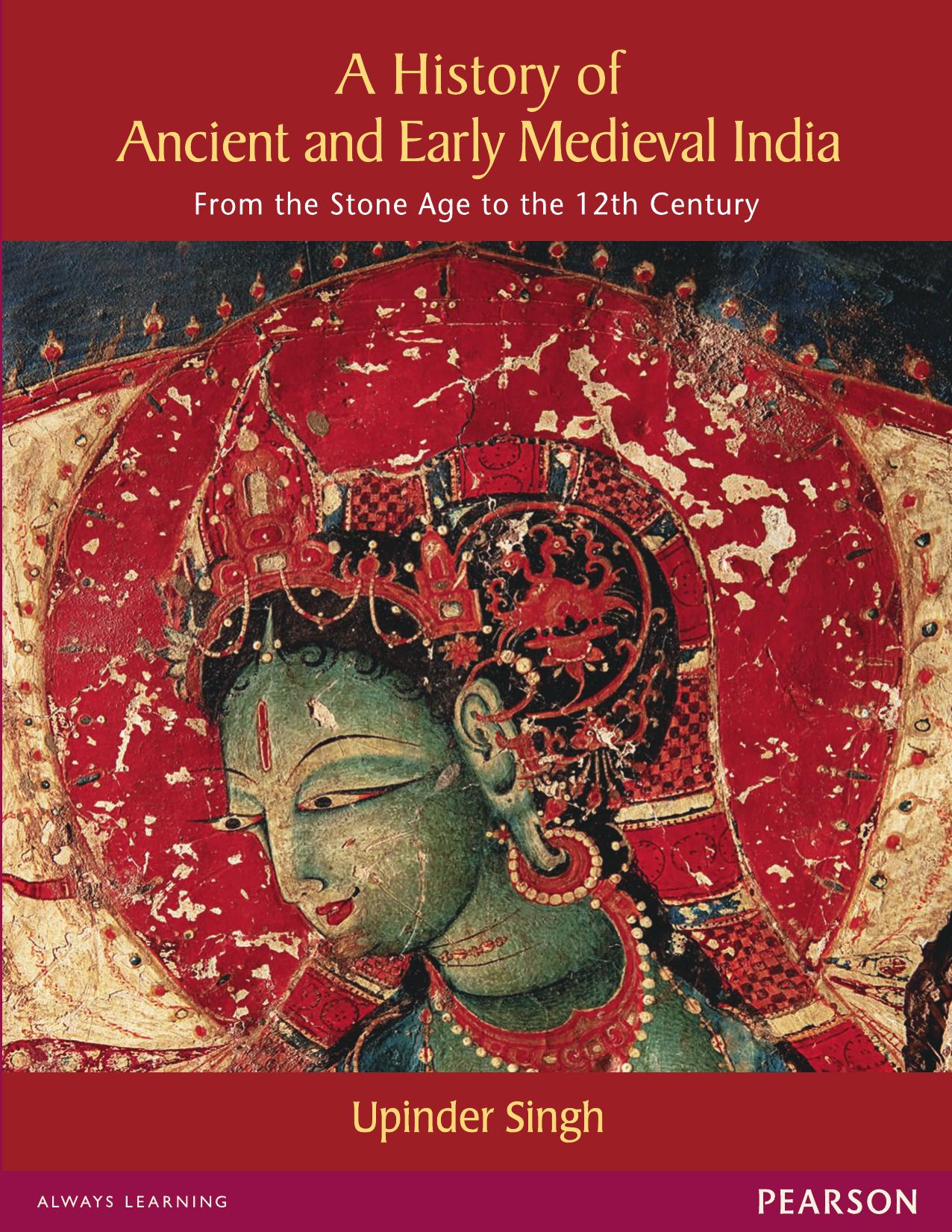
Author:Upinder Singh [Singh, Upinder]
Language: eng
Format: epub, pdf
ISBN: 9788131711200
Publisher: Pearson India
Published: 2009-12-13T18:30:00+00:00
The Nature and Structure of the Maurya Empire
The problems posed by the major sources for the Maurya period have implications for our understanding of the nature and structure of the empire. There is the Arthashastra, a theoretical treatise, not composed in its entirety in the Maurya period, which talks of a potential state within the framework of an established tradition of scholarship on statecraft. Just how much of what it says can be connected to the manner in which the Maurya empire was governed is difficult to assess. Second, there are different versions of fragments of a lost text, Megasthenes’ Indica, replete with several discrepancies and inaccuracies. The third major source, Ashoka’s inscriptions, have the advantage that they are securely dated to the reign of Ashoka, but as they mostly deal with Ashoka’s dhamma, they offer only fleeting, incidental references to administration. The political implications of the numismatic finds and the archaeological evidence have not yet been properly explored.
The question is not whether the Maurya state was an empire or not, but what sort of empire was it? What did it mean for a territory or people to be absorbed into its fold? What were the strategies and degrees of control over different areas? How effective was this control? The three major sources for the Maurya period may actually mask the ground realities. All of them were, in one way or another, connected with the Maurya court. They project the point of view of the political–intellectual elites at the centre and perhaps exaggerate the level of central control.
The idea of a highly centralized Maurya empire was based partly on an assumption that empires and centralization go together. It was also based on an uncritical reading of the Arthashastra, which presents a state that controls the people, produce, and resources of its domain with all-encompassing and robotic precision. More recent writings on the Maurya state have gone to the other extreme. Gerard Fussman (1987–88) has argued that given the extent of the empire and the communication networks of the time, the Maurya empire could not possibly have been centralized. Maurya rule was superimposed over a number of existing political units, which must have been allowed to continue to exercise varying degrees of autonomy. Ashoka’s personal supervision applied only to the propagation of dhamma, not to details of routine administration. Initiatives at the provincial and local administrative level are evident in the script, language, content, and location of the inscriptions. For instance, the fact that the Greek and Aramaic inscriptions in the northwest are not literal translations of the standard edicts suggests that considerable initiative was left in the hands of local officials.
Romila Thapar ([1963], 1987) initially presented the Maurya empire as a new form of government marked by centralized control and planning. Her subsequent re-consideration of the issue (1984) suggests that the Maurya empire was not a homogeneous whole, and that it subsumed different sorts of economies, polities, and life-ways. Using the framework of world systems theory, Thapar suggests that the empire should be considered as consisting of metropolitan, core, and peripheral areas.
Download
A History of Ancient and Early Medieval India: From the Stone Age to the 12th Century by Upinder Singh.pdf
This site does not store any files on its server. We only index and link to content provided by other sites. Please contact the content providers to delete copyright contents if any and email us, we'll remove relevant links or contents immediately.
What's Done in Darkness by Kayla Perrin(27010)
The Ultimate Python Exercise Book: 700 Practical Exercises for Beginners with Quiz Questions by Copy(20909)
De Souza H. Master the Age of Artificial Intelligences. The Basic Guide...2024 by Unknown(20667)
D:\Jan\FTP\HOL\Work\Alien Breed - Tower Assault CD32 Alien Breed II - The Horror Continues Manual 1.jpg by PDFCreator(20558)
The Fifty Shades Trilogy & Grey by E L James(19512)
Shot Through the Heart: DI Grace Fisher 2 by Isabelle Grey(19409)
Shot Through the Heart by Mercy Celeste(19268)
Wolf & Parchment: New Theory Spice & Wolf, Vol. 10 by Isuna Hasekura and Jyuu Ayakura(17420)
Python GUI Applications using PyQt5 : The hands-on guide to build apps with Python by Verdugo Leire(17399)
Peren F. Statistics for Business and Economics...Essential Formulas 3ed 2025 by Unknown(17235)
Wolf & Parchment: New Theory Spice & Wolf, Vol. 03 by Isuna Hasekura and Jyuu Ayakura & Jyuu Ayakura(17137)
Wolf & Parchment: New Theory Spice & Wolf, Vol. 01 by Isuna Hasekura and Jyuu Ayakura & Jyuu Ayakura(16748)
The Subtle Art of Not Giving a F*ck by Mark Manson(14981)
The 3rd Cycle of the Betrayed Series Collection: Extremely Controversial Historical Thrillers (Betrayed Series Boxed set) by McCray Carolyn(14477)
Stepbrother Stories 2 - 21 Taboo Story Collection (Brother Sister Stepbrother Stepsister Taboo Pseudo Incest Family Virgin Creampie Pregnant Forced Pregnancy Breeding) by Roxi Harding(14316)
Cozy crochet hats: 7 Stylish and Beginner-Friendly Patterns from Baby Beanies to Trendy Bucket Hats by Vanilla Lazy(13561)
Scorched Earth by Nick Kyme(13136)
Reichel W. Numerical methods for Electrical Engineering, Meteorology,...2022 by Unknown(13006)
Drei Generationen auf dem Jakobsweg by Stein Pia(11300)
